
Sake has something most other drinks do not: the drinker actively chooses the temperature. Cold sake at 5°C and hot sake approaching 50°C are the same liquid but entirely different drinks. The vessels that make this temperature choice possible — and hold it — are the tokkuri and the ochoko.
What Is a Tokkuri
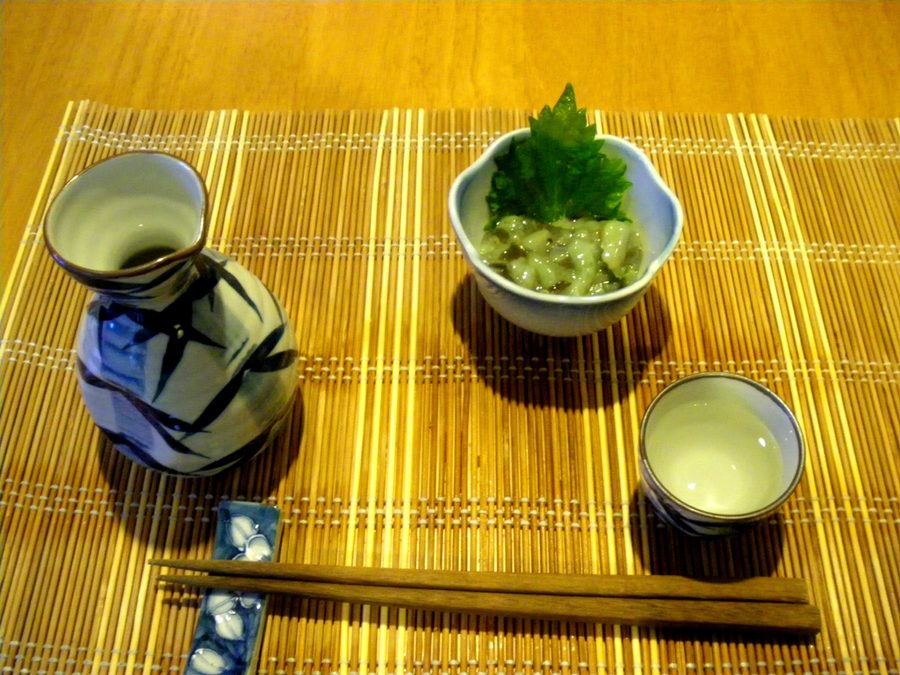
A tokkuri (徳利) is a flask-shaped container for serving sake, made from ceramic or glass. The typical form is rounded at the base and narrows toward the top. Standard capacity is 180ml — one gō (合), the traditional Japanese unit of measure for sake.
This shape is not arbitrary. The narrow neck serves two functions.
First, it controls the flow when pouring. A narrow opening slows the sake as it comes out, making it easy to pour into a small vessel like the ochoko without spilling.
Second, it maintains temperature. The rounded body holds the sake while the narrow neck minimises the surface area exposed to the outside air. Hot sake cools more slowly than it would in a container with a fully open top. This is why the traditional method of warming sake — setting the tokkuri in a bowl of hot water (yusen, 湯煎) — works so effectively. The shape is designed to receive heat gradually and retain it.
What Is an Ochoko
An ochoko (お猪口) is the small cup from which sake is drunk. Capacity is typically 30–60ml. Forms range from simple cylinders to flower shapes, but the slightly flared rim is the most common.
The small volume has a functional purpose. Sake is a drink to be poured frequently, in small amounts, and shared slowly. Because the ochoko is small, it must be refilled often — and the act of pouring (shaku, 酌) for one another becomes a natural, repeated gesture. This gesture became a social language at the Japanese table. Refilling a companion's empty cup is courtesy; filling your own first is not done.
Temperature and Sake Flavour
Sake changes dramatically with temperature — and Japan developed a precise vocabulary for this. The main temperature ranges and their traditional names:
| Name | Temperature | Character |
|---|---|---|
| Yukibie (雪冷え) | 5°C | Aroma closed, clean and crisp |
| Hanabie (花冷え) | 10°C | Aroma beginning to open |
| Suzubie (涼冷え) | 15°C | Balance of aroma and flavour begins |
| Hinataikan (日向燗) | 33°C | Aroma opens gently |
| Hitohadakan (人肌燗) | 37°C | Body temperature — soft, rounded |
| Nuruukan (ぬる燗) | 40°C | Richer aroma, umami rises |
| Jōkan (上燗) | 45°C | Acidity prominent, aroma clear |
| Atsukan (熱燗) | 50°C | Intense aroma, strong alcohol, dry |
What changes with temperature? The umami (旨味) derived from amino acids in sake is perceived as fuller and richer when warm. The floral, fruity aromas characteristic of ginjo-grade sake, on the other hand, dissipate with heat — which is why ginjo is almost always served chilled.
Warming Sake in a Tokkuri
The traditional method is yusen (湯煎): the sake-filled tokkuri is placed in a pot or bowl of hot water and warmed indirectly. Because there is no direct heat, the alcohol does not volatilise sharply, and the temperature can be raised to a precise level.
Warming in a microwave is convenient but produces uneven heat, and the sake inside the tokkuri can boil locally, causing rapid alcohol loss. It is not recommended.
Ceramic Tokkuri vs Glass Tokkuri
A ceramic tokkuri absorbs heat slowly and releases it slowly. Hot sake cools more gradually, holding its temperature longer — the reason traditional restaurants prefer ceramic. A glass tokkuri lets you see the sake inside. The colour of sake — from transparent to pale yellow to golden — reflects the degree of ageing and the rice polishing ratio. For cold sake, glass is the more suitable choice.
Beyond the Ochoko — Masu and Sakazuki
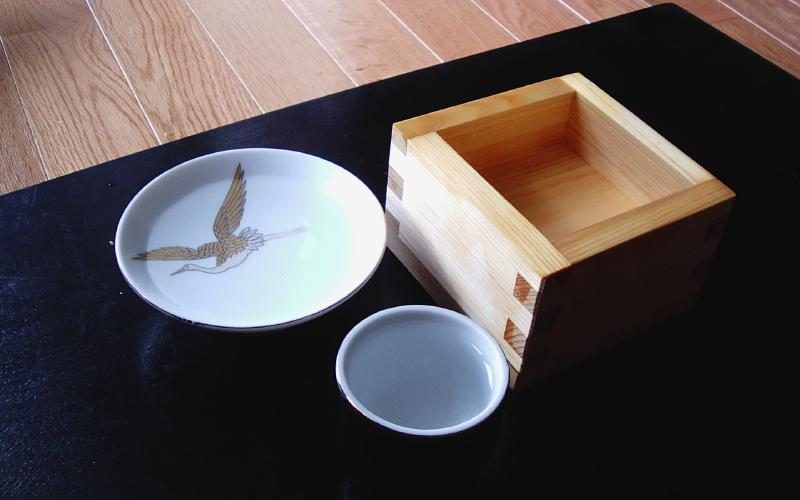
Other vessels are also used for sake.
The masu (枡) is a square box made from cedar. Originally used to measure rice and grain, it came to be used for drinking sake as well. The cedar aroma infuses the sake — a characteristic flavour shift. Today it is used at festivals and special occasions for atmosphere.
The sakazuki (盃) is a flat, wide cup. It is used in formal ritual and in the wedding ceremony san-san-kudo (三三九度), in which the bride and groom alternately drink sake from three cups of different sizes.
How the Size of a Cup Determines the Pace of Drinking
The 30–60ml capacity of the ochoko is not simply tradition. This size makes it impossible to rush. A small cup must be refilled frequently, and each refill extends the conversation.
Consider the inverse: if the ochoko were the size of a beer mug, the social character of Japanese sake culture would be entirely different. The size of the vessel shapes the pace of drinking; the pace of drinking shapes the rhythm between people.