In Britain, "a pint" is how you order beer. "A pint, please." Whether you are asking for a glass or a quantity is beside the point — the two are inseparable. The pint glass and British pub culture are bound together so completely that one cannot be discussed without the other.
How Much Is a Pint
The British Imperial Pint is 568ml. The US Pint is 473ml. The same word, but nearly 100ml apart. An American ordering a pint in a British pub and being surprised by the size of the glass is not uncommon.
The divergence comes from the historical split in measurement systems. The United States developed its own units based on the standards used during the colonial era, while Britain later reformed its own weights and measures independently. The result was two systems sharing a name but not a quantity.
In Britain, the legal status of the pint is firm. The Weights and Measures Act 1985 requires that beer be sold in pint or half-pint measures. If you order a pint and receive less than 568ml, it is a legal violation. The glass must carry an official government-certified capacity mark.

The Birth of the Nonic Pint Glass
The most common pint glass in British pubs today is the nonic. Its defining feature is a slight outward bulge positioned roughly two-thirds of the way up the glass — the sides rise straight before flaring outward at this point, then tapering slightly back inward toward the rim.
Why this bulge? Two reasons.
Grip. Wrapping the thumb and forefinger around the bulge gives a secure, slip-free hold. When lifting a heavy, beer-filled pint with one hand, the protrusion provides a reliable anchor point.
Stackability. When stacking multiple glasses of the same design, the base of the upper glass rests on the bulge of the lower one, creating a gap between them. This prevents the glasses from jamming together (stucking) and becoming impossible to separate — a significant practical concern in pubs managing hundreds of glasses.
The nonic design is generally credited to Ravenhead, a British glassware company, in the 1960s. One popular explanation for the name is "No Nick" — referring to the fact that the previous straight-sided pint glass was prone to chipping at the rim when glasses knocked against each other, a problem the nonic design addressed.
Types of Pint Glass
The nonic is not the only pint glass found in British pubs.
Straight Pint. A plain cylinder. The traditional form that preceded the nonic. Still used in some pubs.
Dimple Pint (Jug Pint). A handled glass with a diamond-pattern texture on the surface. Associated with traditional British ale culture. Less common today, but found in pubs with a classic atmosphere.
Tulip Pint. Narrower at the base, flaring toward the top. The most famous example is the official Guinness glass, designed specifically for Irish stout. The curve of the glass affects the formation of Guinness's characteristic nitrogen-derived creamy head.
The Pint and British Society
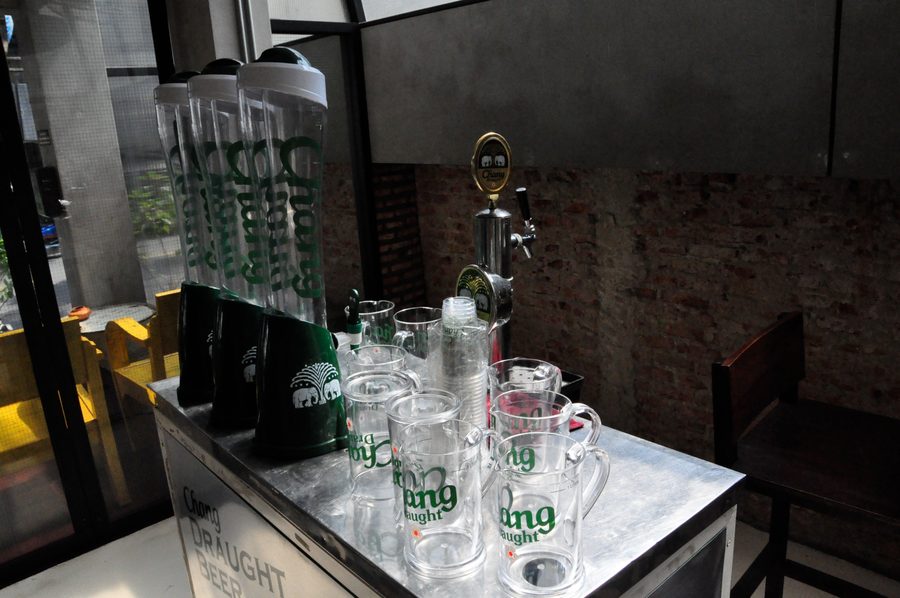
In Britain, the pint is a social unit, not merely a drink. "Let's go for a pint" means let's meet up. Work drinks, watching sport, after-work gatherings — all are organised around "a pint." The pub — short for "public house" — was never just a bar. It was a community space: a place where information was exchanged, politics debated, and deals struck through the seventeenth and eighteenth centuries. In small towns and rural areas of Britain today, the pub still fulfils this role.
The pint glass is the physical symbol of this culture. Unlike a whisky glass or wine glass, which belong to individual experience, the pint has its full meaning only when several of them are on the table together.
The Head Debate
Order a pint in Britain and the beer will have a head of foam on top. The thickness of that head has been a long-running controversy.
Under one reading of the Weights and Measures Act, a pint glass must contain 568ml of liquid. But some pubs serve 568ml including the head — meaning the actual liquid content is less. Consumer groups have raised this issue repeatedly.
Some pubs use glasses with a "serve line" marked on them — a line up to which the beer body must be filled, with space above for the head to form. British consumers have the right to request a "top up" if they feel their glass has been underfilled.