Laphroaig
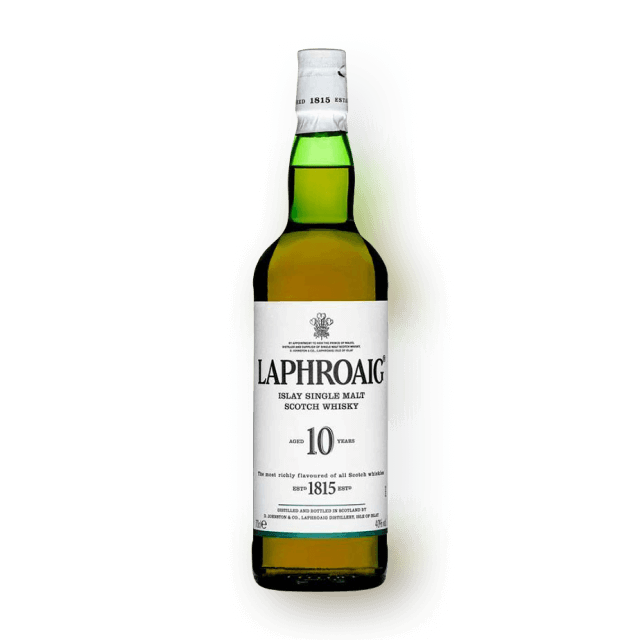
Iodine and antiseptic — the most divisive edge of Islay.
Laphroaig is the whisky that divides people most extremely. Iodine, disinfectant, a medicine-cabinet pungency hits first, and some recoil while others take it as the drink of a lifetime. There isn't much middle ground.
A fun bit of history: during American Prohibition, Laphroaig's medicinal smell reportedly got it classified as a "medicine" and imported legally. That's how distinctive the aroma is. To this day it ties its fandom together with the quirky "Friends of Laphroaig" scheme, which grants nominal ownership of one square foot of Islay.
The common misconception is that "Laphroaig is the peatiest whisky on earth." By peat figures (ppm) alone, there are heftier ones. Laphroaig's essence isn't intensity but the particular direction of that medicinal, maritime note. The recommendation is the 10. Shocking at first, but add a few drops of water and give it time, and an unexpected sweetness opens up. And if it still isn't for you — that's taste, not your fault.
Laphroaig leans less on collector prices than on standing, through its 10 Year and Quarter Cask, for the most medicinal style of peat. In 1994 the then Prince of Wales (now King Charles III) granted it a Royal Warrant, so it is sometimes called the whisky the crown approved.
Prices are rough duty-free / retail · not a personal tasting
Even among Islay's peated malts, Laphroaig divides drinkers with the most medicinal nose. Barley smoked over hand-cut peat carries strong iodine, antiseptic and seaweed notes, and bourbon-cask maturation lays vanilla sweetness beneath. The Quarter Cask pushes further with small casks and more wood contact.
The Johnston brothers, Donald and Alexander, founded it on Islay's south coast in 1815. In the 20th century Bessie Williamson became a rare woman to run a Scotch distillery here. It received Prince Charles's Royal Warrant in 1994 and now sits under Beam Suntory.
In Korea, Laphroaig is the name for those chasing peat at its most extreme. With Ardbeg it forms the twin poles of heavy peat; the iodine and antiseptic split first-timers, but converts rarely leave. It's less a gentle introduction than a stage for those who enjoy strong character.
Strong peat and iodine scatter easily, so an aroma-gathering Glencairn or copita is standard. The 10 is 40%, fine neat; cask strength opens its sweet, citrus side with a drop or two of water. With aromas this strong, keep perfume and cigarettes well away.
Sources · Production & range — laphroaig.com · Product image — Laphroaig