
Makgeolli has something wine and whisky do not. It is drunk from a bowl — wide, low, handleless. No stem, no narrow opening, no concentrating structure. Is this coincidence or necessity?
What Is a Sabal
A sabal (사발) is a wide-mouthed bowl with a foot ring — one of the fundamental forms in Korean ceramics, used for centuries as a rice bowl, soup bowl, and drinking vessel alike. White porcelain sabal, buncheong sabal, rough earthenware onggi sabal — the materials vary, but the logic of the form does not.
Wide mouth, low profile, held in both palms. These two properties explain the relationship between makgeolli and the bowl.
Makgeolli's Nature Chose the Bowl
Makgeolli is takju — cloudy rice wine. It is fermented from rice, water, and nuruk (a fermentation starter), then served without fully filtering out the lees. Live yeast and enzymes remain in the liquid. Sediment sinks to the bottom of the bottle or jar.
To drink it evenly, you need to mix that sediment back in — swirling the bowl or stirring the bottom. A wide, low vessel does this far more naturally than a tall, narrow glass. The motion of cradling a makgeolli-filled bowl in both palms and swirling it gently is a gesture refined over hundreds of years of practice.
Carbonation plays a role too. Makgeolli produces natural carbon dioxide during fermentation. Freshly poured makgeolli is lively with carbonation and has a distinctive refreshing fizz. A narrow glass leaves insufficient space for the carbonation to rise — bubbles foam up excessively. The wide mouth of the bowl allows the carbonation to release naturally.
Alcohol content matters as well. Makgeolli is typically 6–8% ABV — low compared to whisky or soju. There is no need to concentrate the aroma, and no need to diffuse alcohol harshness. A wide mouth presents no disadvantage for the drinking experience.
Agrarian Society and Communal Drinking
The relationship between makgeolli and the bowl is most clearly visible in how it was drunk. In the farming communities of the Joseon era, makgeolli was consumed collectively. During rest breaks in the communal rice-planting and harvest work known as dure (두레), makgeolli stored in large jars was scooped out with a ladle and poured into each person's bowl.
Drinking directly from a shared vessel — rather than individual poured glasses — naturally selected for the bowl's form. A vessel you can scoop into, stir the sediment in, hold comfortably in the hand, and replace cheaply when broken. Makgeolli was the drink of labour in this culture: a way to quickly restore energy, quench thirst, and confirm community through shared drinking.
From Ceramic Bowl to Plastic Ladle
In the mid-twentieth century, Korean makgeolli culture changed. As makgeolli production industrialised, traditional bowls gave way to plastic ladles and aluminium bowls. The reason was simple: cheap, unbreakable, easy to clean.
In the makgeolli houses of 1960s and 70s Seoul, the plastic ladle was the standard vessel. A bowl of makgeolli, a plate of pajeon (green onion pancake). The image of drinking makgeolli poured into a plastic ladle in one go became a symbol of working-class drinking culture of that era.
This change coincided with makgeolli's decline. Through the 1970s and 80s, soju rapidly took market share from makgeolli. As makgeolli consumption fell, so did the makgeolli houses, and the plastic ladle acquired an increasingly dated image.
The Makgeolli Renaissance and the Return of the Bowl
In the late 2000s, the makgeolli market revived. The causes were multiple: growing interest in healthy drinks, renewed attention to traditional food culture, and deregulation of the makgeolli industry. Within this movement, makgeolli began repositioning itself — from a commoner's drink to a traditional fermented beverage.
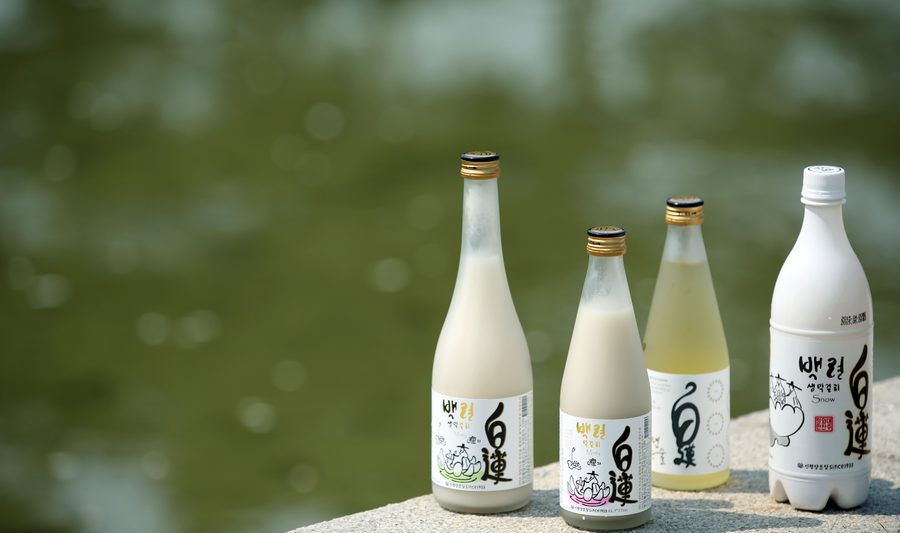
The vessel changed too. White porcelain bowls, buncheong ceramics, and individual sabal made by studio potters reappeared on the tables of makgeolli-specialist restaurants. Makgeolli in a flat, wide traditional bowl looks different from makgeolli in a plastic ladle — and the texture of pottery against the hands feels different.
The Physical Logic of the Bowl
When you drink makgeolli from a bowl, here is what happens physically.
Temperature management. Cradling the bowl's base and sides in both palms gently warms the makgeolli. For whisky, this is a drawback. For makgeolli, it is different. Makgeolli enthusiasts consistently report that the balance of acidity and sweetness comes through better when it is slightly warmed rather than drunk cold. The thermal conductivity of ceramic is lower than metal — hand warmth influences the makgeolli's temperature gradually, not abruptly.
Mouth and aroma. The wide mouth does not concentrate the aroma. Makgeolli's scent — the nuttiness of rice and nuruk, the acidity of fermentation, the freshness of carbonation — is perceptible without concentration. Makgeolli does not need nosing.
Swirling and sediment. Resting the bowl in one palm and swirling it gently in a circular motion mixes the settled sediment evenly. The purpose is the same as swirling wine — but the method and the vessel form are entirely different.
Why It Should Be a Bowl
The bowl is the form optimised for what makgeolli is: cloudy, carbonated, low in alcohol, and meant to be shared. The reason this form has not changed in hundreds of years is not custom alone. It is that no better vessel for drinking makgeolli has yet been invented.
A bowl of makgeolli. What it holds is not only grain and water.