The Dalmore
A sherry-leaning luxury Highland — the single malt under the 12-point stag.
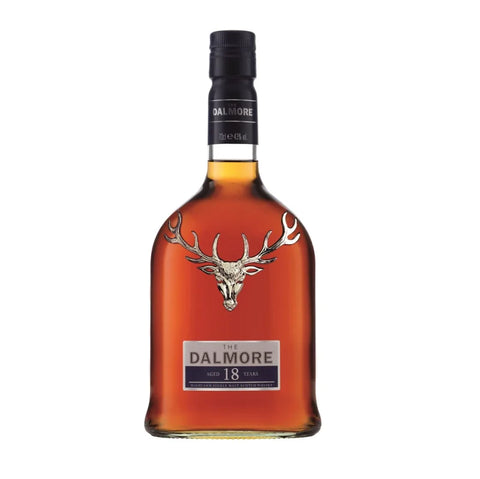
You can spot a Dalmore from across the room, thanks to the 12-pointed stag mounted on the bottle. It comes from a legend that the noble Mackenzie clan earned the right to the stag emblem for saving a king from one — and it's also a sign of just how conscious this brand is of "luxury."
The flavour runs to rich sherry with chocolate and orange peel, a weighty sweetness. If you want something light it's the wrong direction; if you like a dessert of a whisky, it fits. Much of that is down to master blender Richard Paterson. Known as "The Nose," he's famous for his tasting showmanship and gifted at wrapping a story around the spirit.
One common suspicion: "isn't Dalmore really just marketing?" Given how flamboyantly the ultra-premium limited editions sell, it's a fair question. Half true — but a multi-cask release like King Alexander III is genuinely interesting in its make-up, too interesting to write off as marketing alone.
For a first bottle, the 12 is the realistic starting point. The sherry sweetness comes through generously, letting you taste the opulent style Dalmore aims for without paying a fortune.
The Dalmore 62 has contended for the highest price ever paid at whisky auction, changing hands in the low hundreds of thousands of pounds. Prestige sherry casks, aged vintages and a luxury positioning make Dalmore the 'collector's Highland'. The name of master distiller Richard Paterson — 'The Nose' — adds to the draw.
Prices are approximate retail / duty-free · Auction prices highly volatile · Not a personal tasting score
Beyond bourbon casks, Dalmore's core is González Byass Matusalem oloroso sherry wood. The result is a rich, heavy sweetness of orange, dark chocolate and coffee. The higher the range climbs, the more it layers older sherry casks and multiple finishes — six cask types in King Alexander III — a sherry-led luxury Highland.
Founded in 1839 by the river at Alness in the Highlands. The 12-point stag crest comes from a legend that the Mackenzie family was granted it for saving a Scottish king; today it is owned by Whyte & Mackay (under the Philippines' Emperador). Master distiller Richard Paterson is the brand's face.
In the US and UK, Dalmore reads as a rich, sherried luxury malt — a step toward the prestige end, often chosen as a gift. Its heavy orange-and-chocolate sweetness speaks to lovers of Macallan, and the stag and high-end lines lend a formal air. It suits those who prefer deep, dark sweetness over light and fresh.
To bring out the dense sherry sweetness, a glass that gathers the aroma — a Glencairn or copita — is the standard. The 12 and 18 are around 40%, needing little water, and a large cube tends to close the nose, so neat serves better. Heavy of aroma, hold it by the base; cup the bowl to warm it if it stays shut.
Sources · Production & range — thedalmore.com · Auction prices volatile · Product image — The Dalmore