
Buffalo Trace
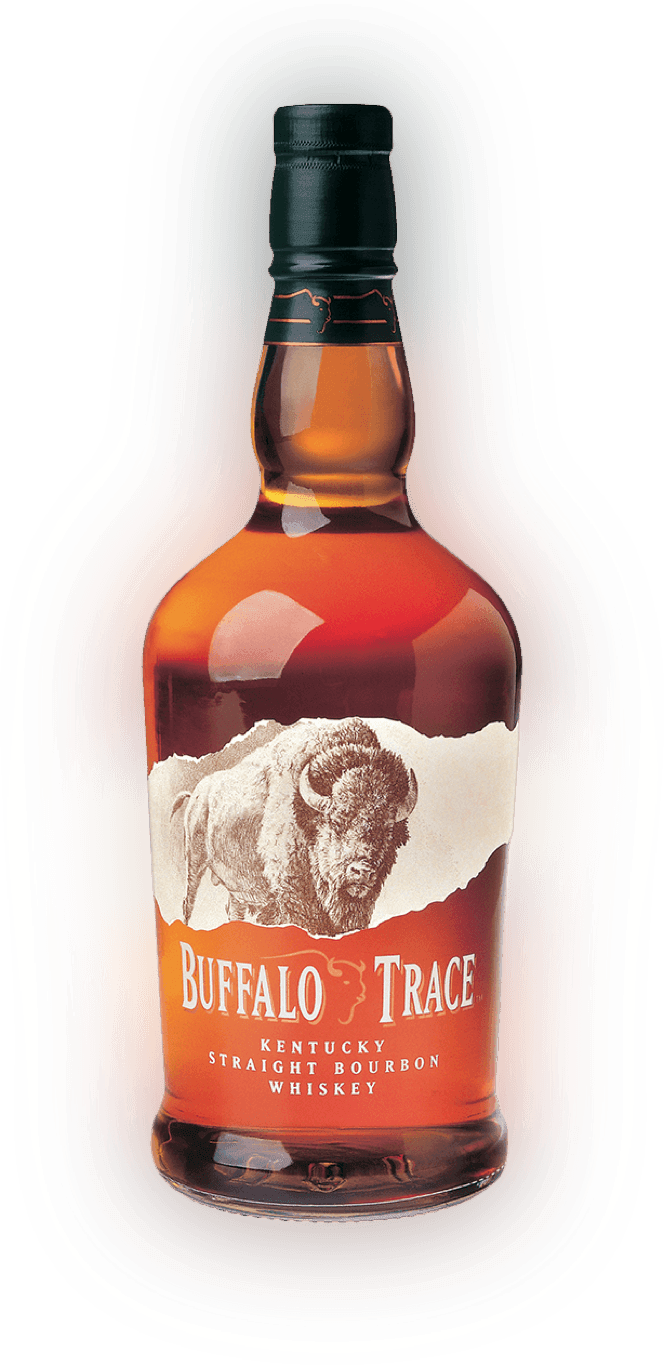
The distillery that made Pappy, Weller and Blanton's — yet the bourbon under its own name is a value icon.
Ask people to name a single bourbon for a beginner and a lot of them say Buffalo Trace. The reason is simple: it tastes far better than it costs. Vanilla, caramel and a little spice fold together easily, and it's faultless neat or mixed with cola.
The fun part is that this one distillery also makes the bottles bourbon geeks lose their minds over — Pappy Van Winkle, Weller, Eagle Rare. So Buffalo Trace is almost more famous for the line of hard-to-find whiskies behind it than for its own name. Can't get Pappy? People hunt down Weller and call it "the poor man's Pappy."
Here's a common misconception, though: expensive bourbon isn't automatically better. A lot of the sold-out, premium-priced bottles are really a scarcity business. The plain Buffalo Trace itself is often just as satisfying as a limited release costing two or three times more.
So the advice is simple. Don't chase the unicorns — just grab the bottle of Buffalo Trace or Eagle Rare that's actually on the shelf. It's a lot more enjoyable than burning out on the hunt.
Buffalo Trace is one of America's longest continuously operating distilleries, making Pappy Van Winkle, Weller, Blanton's and Eagle Rare under one roof. The flagship Buffalo Trace is priced low enough to be the 'value bourbon', though demand often makes it scarce. The real premiums land on the Antique Collection (George T. Stagg and the like), Blanton's, and Pappy.
Prices are approximate retail / duty-free · Limiteds and the Antique Collection swing widely on the secondary market · Not a personal tasting score
Buffalo Trace is made on the bank of the Kentucky River in Frankfort, named for an old crossing where buffalo forded the river. Two mash bills, and maturation that varies by which warehouse and floor a barrel sits on, yield distinct expressions — Buffalo Trace, Eagle Rare, Blanton's. The flagship uses Mash Bill #1, with rye as the flavour grain, laying light spice under vanilla and caramel.
Distilling on the site reaches back to the late 1700s, and it is one of the few distilleries that kept running through Prohibition on a medicinal-whiskey licence. It took the name 'Buffalo Trace' in 1999, under the New Orleans-rooted owner Sazerac. Its tie to the Van Winkle family has made it today's most talked-about bourbon distillery.
In Korea, Buffalo Trace has a 'buy it whenever you find it' reputation as a value bourbon. The price is low but the supply thin, so it is often absent from shelves, and Blanton's and Weller are rarer still and carry premiums. It is a first pick for those after a balanced, classic bourbon over flash.
As a balanced classic bourbon, it shows clear vanilla, caramel and light spice neat in a Glencairn. It also takes well to the rocks, opening slowly over a single large cube, and the flagship is fine as a highball or cocktail base. The higher-proof, characterful single barrels like Blanton's reward a glass that gathers the nose.
Sources · Production & range — buffalotracedistillery.com · History — Wikipedia 'Buffalo Trace Distillery' · Product image — Buffalo Trace