Ballantine's
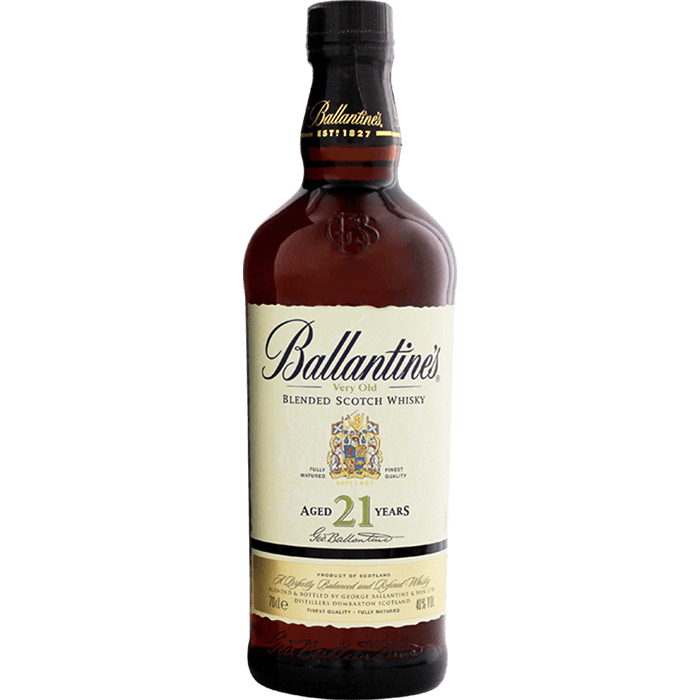
The world's second best-selling Scotch blend. Its 17-year-old was, for a generation, the symbol of premium blends in Korea.
In Korea, Ballantine's was more than just whisky. Through the 1990s and 2000s, Ballantine's 17 and 30 sat at the very top of business entertaining and holiday gifts. The phrase "a bottle of Ballantine's 30" worked as a status symbol in itself, and for a while Korea ranked among the brand's largest markets in the world.
As a drink, Ballantine's is a textbook of blending. It marries dozens of single malts and grains into one consistent flavour, and keeping that taste identical year after year is a harder craft than it sounds. The master blender's nose and experience are the heart of it.
A common misconception: that "a higher age statement automatically means better flavour." Ballantine's 30 isn't necessarily more delicious than the 17 — often it's simply rarer and more expensive. There's a reason so many people name the 17 as the balance sweet spot.
Recommend by purpose. The Finest for a highball or easy drinking; the 17 neat, when you want to savour the smoothness. Rather than spending big on the 30, I'd suggest a bottle of the 17 to feel why Ballantine's was so loved.
Ballantine's value lies in share and consistency rather than scarcity — it is the world's second best-selling blended Scotch, behind Johnnie Walker. The 17, first created in 1937, has long been a blender's point of pride, and in Korea it became shorthand for a premium blend through the 1990s and 2000s. Aged expressions like the 30 fill the collector and gifting tier.
Sales rank — industry estimates · Prices are approximate retail / duty-free · Not a personal tasting score
Ballantine's is not the spirit of one distillery but a blended Scotch married from some 40 malt and grain whiskies. Signature malts like Glenburgie and Miltonduff form the backbone, with light smoke beneath a soft sweetness of honey, vanilla and apple. The heart of it is recreating the same taste each year — the master blender tunes the ratios of dozens of whiskies to hold that consistency.
It began in 1827 when George Ballantine opened a grocer's shop in Edinburgh. Blending whiskies to suit customers grew into a brand, and it spread worldwide on the blended-Scotch boom of the late 19th century. The 17 of 1937 set a benchmark for aged blends, and today, under Pernod Ricard, Ballantine's holds its place as the world's second best-selling Scotch blend.
In Korea, Ballantine's — and the 17 in particular — defined an era of premium blends. In a culture of business entertaining and gifting, 'Ballantine's 17' was another name for fine whisky, and that image lingers. Its strength is a smoothness that offends no palate rather than a bold character, which makes it a common recommendation for newcomers to blends.
As a soft blend it takes neat, on the rocks or as a highball equally well. Finest and the 12 open slowly over a single large ice cube or mix happily with soda, while the 17 and up deserve a Glencairn or copita to savour the grain of light smoke and sweetness.
Sources · Production & range — ballantines.com · Sales rank — industry estimates · History — Wikipedia 'Ballantine's' · Product image — Ballantine's